Raising Thriving Teenagers Through Adventure

Lessons from Brainstorm by Daniel Siegel
Parenting teenagers can sometimes feel confusing, exhausting, and even frightening.
One moment your child is thoughtful and affectionate. The next they are impulsive, emotional, withdrawn, or desperate to be with friends rather than family. Many parents begin to wonder:
What happened to my child?
Why are they suddenly taking risks?
Why do they seem so emotional?
How do I stay connected without controlling them?
In Brainstorm, psychiatrist Daniel J. Siegel offers a refreshing answer:
Adolescence is not a disorder. It is a vital stage of transformation.
The teenage years are not simply something to “get through.” They are a period of enormous growth, courage, creativity, emotional intensity, and identity formation. The challenge is not eliminating these powerful adolescent drives — it is guiding them wisely.
At Muslim Family Adventures, we see this reality constantly. Teenagers do not merely need lectures, screens, and supervision. They need challenge, belonging, responsibility, mentorship, movement, purpose, and meaningful experiences that stretch them.
Adventure can become one of the healthiest pathways for adolescent development.
The Four Powerful Traits of the Adolescent Mind
Siegel explains that adolescence awakens four core drives in young people.
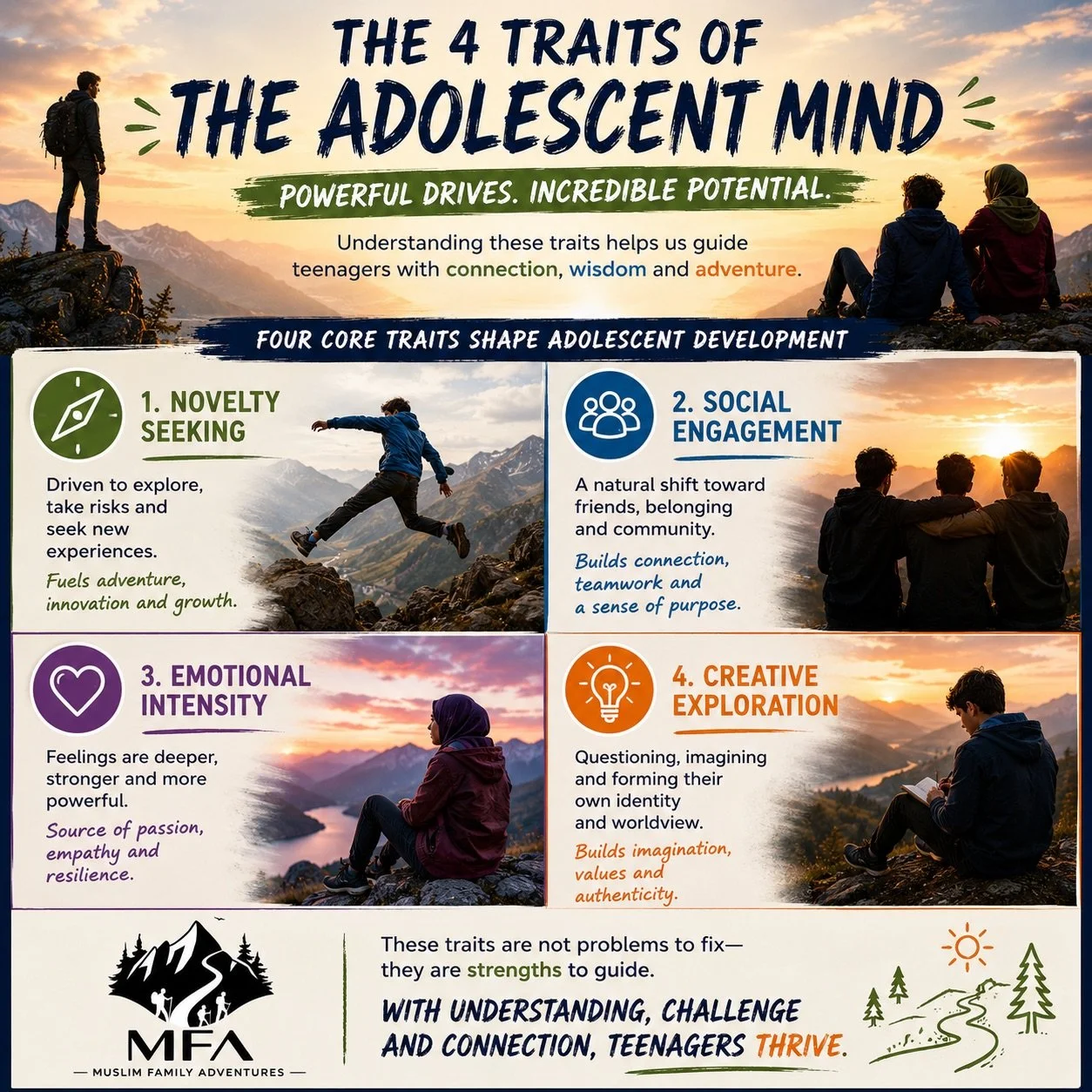
1. Novelty Seeking
Teenagers are wired to seek new experiences, excitement, and challenge.
This is why many adolescents:
crave adventure,
enjoy risk,
become bored easily,
seek intense experiences.
Parents often see this as rebellion or recklessness. But this drive is actually essential for growth.
A teenager climbing a mountain, navigating a canoe expedition, leading a camp task, or sleeping outdoors in difficult conditions is fulfilling this developmental need in a healthy way.
The danger comes when young people cannot find meaningful challenge — because they may then seek intensity through:
harmful peer pressure,
reckless behaviour,
addiction,
endless digital stimulation.
Healthy adventure gives adolescents a constructive form of risk.
2. Social Engagement
Teenagers naturally begin shifting from dependence on parents toward stronger peer relationships.
This can feel painful for parents:
your child talks less,
spends more time with friends,
becomes more influenced by peers.
But this is part of becoming an independent adult.
The key question is not:
“How do I stop peer influence?”
The real question is:
“What kind of peer culture surrounds my child?”
This is why wholesome group experiences matter so deeply.
On adventure retreats, young people often:
build brotherhood and sisterhood,
learn teamwork,
support one another through difficulty,
form friendships around growth instead of consumption.
Shared struggle creates meaningful bonds.
A teenager who climbs a mountain with others, cooks together in the rain, or overcomes fear around a campfire experiences a far healthier social world than one built entirely around social media validation.
3. Emotional Intensity
Teenagers feel emotions deeply.
Parents often see:
dramatic reactions,
mood swings,
frustration,
sensitivity,
withdrawal.
But emotional intensity is not merely a weakness. It is also the source of:
passion,
empathy,
conviction,
love,
spiritual awakening,
creativity.
The goal is not shutting emotions down.
The goal is helping young people regulate and channel emotions wisely.
Adventure environments naturally help with this:
physical movement regulates stress,
nature calms the nervous system,
challenge builds resilience,
reflection deepens emotional awareness.
Many parents notice that after outdoor experiences, their teenagers become:
calmer,
more communicative,
more confident,
emotionally lighter.
Sometimes a long hike creates conversations that never happen at home.
4. Creative Exploration
Adolescents begin questioning assumptions and searching for identity.
They ask:
Who am I?
What do I believe?
What kind of life do I want?
What is my purpose?
This search can become dangerous if young people only find answers through:
influencers,
toxic online communities,
shallow consumer culture.
But it becomes beautiful when they encounter:
meaningful mentorship,
Islamic values,
responsibility,
service,
real-world experiences.
Adventure creates space for reflection.
Away from endless noise and screens, young people often rediscover:
wonder,
gratitude,
courage,
dependence on Allah,
appreciation for family,
clarity about themselves.
What Teenagers Really Need

One of the most powerful ideas in Brainstorm is that adolescents do not need adults who merely control them.
They need adults who:
understand them,
trust them,
guide them,
challenge them,
stay emotionally connected to them.
This balance is difficult.
Too much control creates resentment.
Too little guidance creates chaos.
Teenagers need:
freedom with boundaries,
responsibility with support,
challenge with safety,
independence with connection.
This is exactly why meaningful family adventure matters.
Why Adventure Is So Powerful for Teenagers
Modern life often deprives adolescents of what their brains and bodies naturally seek:
challenge,
movement,
responsibility,
real-world competence,
nature,
belonging,
face-to-face interaction.
Instead, many teenagers experience:
endless screens,
overstimulation,
isolation,
artificial dopamine,
passive entertainment.
Adventure restores balance.
When teenagers:
hike mountains,
paddle rivers,
cook outdoors,
navigate trails,
serve others,
sleep under the stars,
overcome discomfort,
they begin developing:
resilience,
confidence,
patience,
leadership,
teamwork,
emotional regulation,
tawakkul (trust in Allah).
They discover:
“I am capable of more than I thought.”
Practical Ways Parents Can Apply These Ideas
1. Replace Constant Entertainment with Meaningful Challenge
Teenagers need stimulation — but healthy stimulation.
Instead of only trying to reduce screen time, increase:
outdoor activities,
sports,
camping,
volunteering,
expeditions,
skill-building experiences.
2. Prioritise Connection Before Correction
A teenager who feels emotionally connected to parents is more open to guidance.
Sometimes the best conversations happen:
during a walk,
around a fire,
in a car journey,
after shared hardship,
during adventure.
Shared experiences build trust.
3. Give Teenagers Real Responsibility
Young people grow through responsibility, not overprotection.
Allow them to:
lead tasks,
cook,
organise,
mentor younger children,
navigate routes,
contribute meaningfully.
Competence builds confidence.
4. Let Them Experience Safe Difficulty
Modern culture often removes all discomfort.
But resilience grows through manageable struggle:
climbing steep hills,
carrying heavy bags,
waking early,
enduring rain,
persevering through tiredness.
Teenagers need opportunities to discover:
“I can do hard things.”
5. Create Spaces Away from Screens
Nature slows the mind.
Silence, reflection, and real conversation become possible when phones no longer dominate attention.
Many teenagers reconnect with themselves — and with Allah — when removed from constant digital distraction.
Final Reflection
The teenage years are not simply a phase of rebellion to survive.
They are a sacred stage of becoming.
Adolescents are searching for:
identity,
meaning,
belonging,
courage,
challenge,
purpose.
If we fail to provide healthy pathways, unhealthy ones will eagerly compete for their attention.
At Muslim Family Adventures, we believe adventure can become one of those healthy pathways — helping young people grow into resilient, grounded, confident Muslims who know both their strengths and their purpose.
Because sometimes the path to maturity is not found in another lecture…
…but on a mountain trail, around a campfire, paddling through cold water, carrying responsibility, and discovering what Allah placed within them all along.